For contractors, the question is not simply whether a floor needs a fresh coat. It is whether the existing finish provides a suitable foundation for recoating or whether the condition of the floor and the scope of the project call for a full sand and refinish.
Finish integrity, maintenance history, coating compatibility, and the customer’s expectations all influence that recommendation. Evaluating those factors helps define the work before selecting a preparation method.
Stay Informed: Bring Out the Best in Every Floor with Basic Coatings
Subscribe to Basic Coatings emails to join thousands of industry professionals and receive the latest product news, expert tips, training resources, and event invites—delivered straight to your inbox!
Yes, Sign Me Up!
Evaluate the Existing Finish
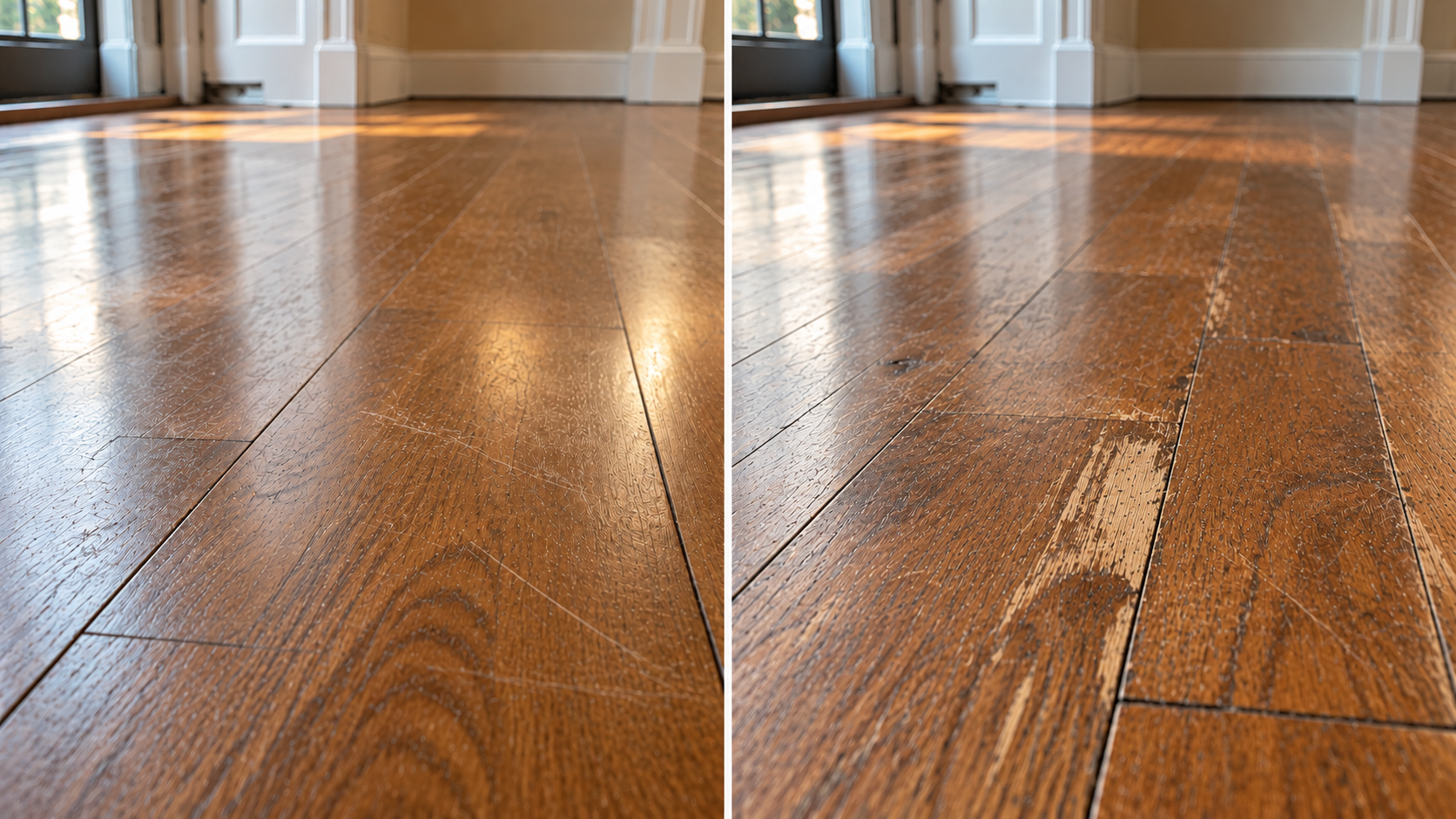
Recoat v. Full Sand and Refinish
Dullness alone does not establish the need for resanding. If wear is confined to an otherwise sound finish, a recoat may restore the sheen and add a protective layer while retaining the existing finish system.
Look beyond the surface. Determine whether scratches remain within the coating or extend into the wood, whether traffic areas have worn through, and whether color remains uniform.
Localized damage also deserves a separate assessment. An isolated scratch may be repairable before recoating. Widespread exposed wood, uneven color from wear, or significant finish failure, such as peeling or delamination, may call for a full sand and refinish. A new topcoat will not correct damage beneath the finish.
Align the Process With the Scope
The customer’s desired result matters as much as the condition of the coating. Renewing the sheen and protection of an existing finish involves a different scope of work than removing deep damage or changing the stain color.
When a full sand and refinish is appropriate, confirm that the flooring can accommodate it. Construction, remaining wear-layer thickness, floor condition, and previous sanding history should inform that assessment.
Use those findings to define what the proposed service will address and which repairs or appearance changes require additional work.
Confirm Compatibility Before Choosing Preparation
A floor’s maintenance history can affect recoat suitability even when the finish appears intact. Ask about cleaners, acrylic polishes, waxes, and other treatments previously applied, then follow the selected system’s inspection and testing procedures.
Surface treatments and contaminants may require additional preparation or rule out a particular recoating system. Verify compatibility with the existing coating before selecting the preparation method.
Complete the proposed process in an inconspicuous test area, from cleaning through topcoat application, to evaluate adhesion and suitability before proceeding across the floor.
A Dust-Free Recoating Option With TyKote
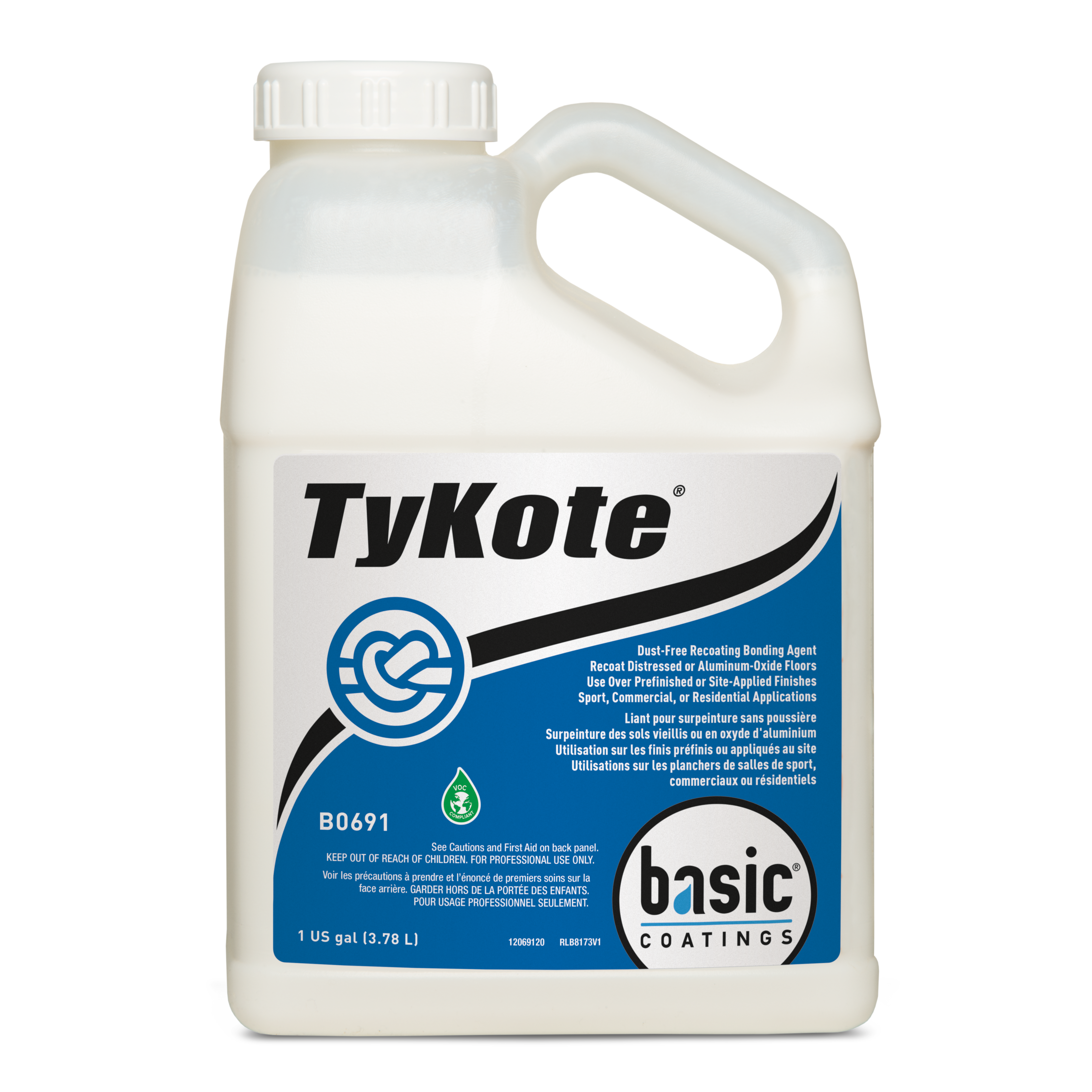
Once a floor is confirmed as a candidate for recoating, the next decision is how to prepare the existing finish for adhesion. Mechanical abrasion is one option. For contractors seeking a dust-free alternative, the TyKote Dust-Free Refinishing System uses a liquid bonding agent between the existing finish and the new topcoat, eliminating screening and its associated dust.
The system combines cleaning with I.F.T. and Squeaky, applying TyKote bonding agent, and topcoating with a compatible Basic Coatings waterbased urethane finish. This approach provides a recoating option for compatible site-finished and factory-finished wood floors, including hand-scraped surfaces.
By eliminating mechanical screening, TyKote also reduces the need for sanding equipment and related setup. This can help contractors minimize disruption in occupied spaces while providing an alternative for textured or distressed floors where conventional screening may be challenging.
Proper preparation remains essential. Acrylic polish must be removed before application, and the system should not be used on floors maintained with paste wax or oil. Additional exclusions include laminate flooring and certain stain-resistant coatings. Consult the application instructions for specific coating exclusions.
Apply TyKote in a thin, uniform layer with complete coverage, and follow the specified drying and topcoating requirements. Confirm suitability through a test application and consult the product directions before proceeding.
For eligible floors, TyKote gives contractors a dust-free way to renew protection while retaining the existing finish.
Click here to explore the TyKote Dust-Free Refinishing System.